
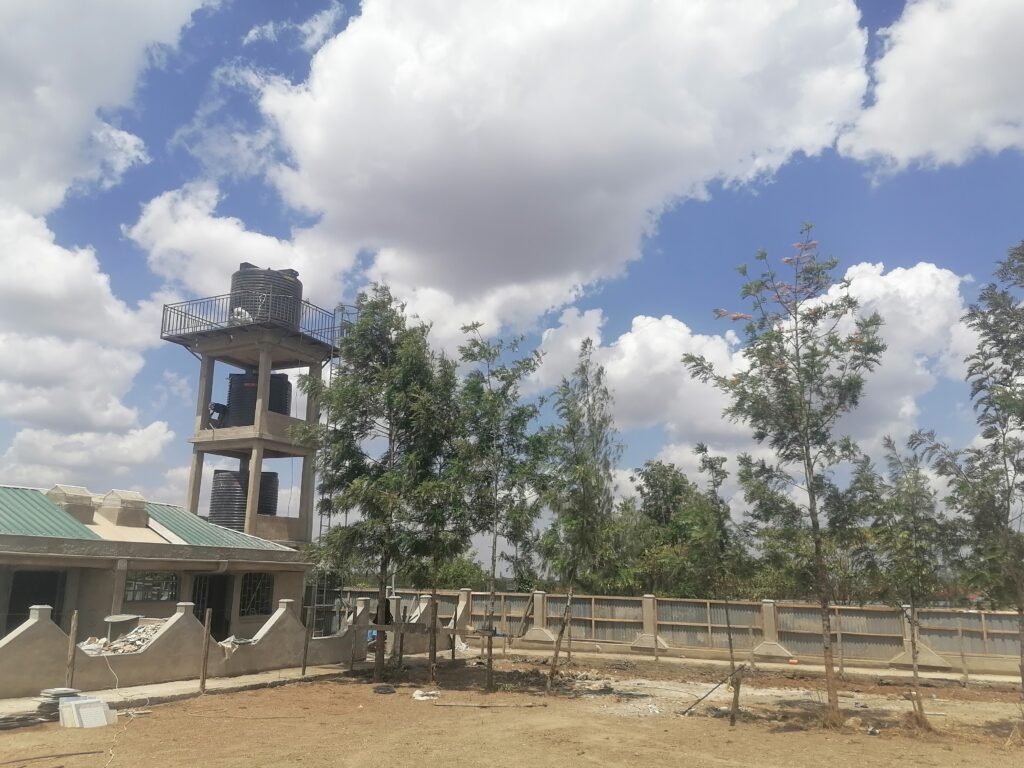
Many steel water towers across East Africa were built decades ago by donors, county governments, schools and farms, often with little documentation. Since then, tanks may have been replaced with larger ones, solar panels added, pipes changed and corrosion allowed to advance. A structural audit and load assessment answers a simple question: can this tower still safely carry a full tank in a storm? This article explains why audits matter, when to carry them out, how they are done and what the results mean.
Why Existing Water Towers Need Auditing
- Added loading: a larger tank, a heavier lining, solar panels, a pump house or a platform extension.
- Corrosion: thinning of legs, bracing, bolts and base plates, especially at the base and around the tank floor where water leaks.
- Tank leaks: continuous dripping soaks the platform, corrodes steel and erodes the foundation.
- Loose or missing bolts and braces, sometimes removed by thieves for scrap.
- Foundation problems: settlement, cracking, erosion, exposed anchor bolts.
- Damage: storms, vehicle impact, lightning or earthquakes.
- Code changes: updated wind or seismic requirements may be higher than when the tower was designed.
- Ageing: fatigue, material deterioration and poor repairs.
An audit finds these issues before they cause failure, and it provides evidence for repair or replacement decisions.
When to Carry Out an Audit
- Before changing the tank or adding solar panels or equipment.
- After storms, earthquakes, floods, impacts or visible damage.
- When leaks, leaning, vibration or noise are observed.
- At regular intervals, commonly every three to five years, and more often in aggressive environments.
- When ownership changes, or when planning rehabilitation under a donor or county programme.
- When drawings or records are missing.
The Audit Process
Step 1: Collect documentation. Gather original drawings, design calculations, geotechnical reports, tank specifications, repair records and previous inspection reports. If none exist, plan to survey and reverse-engineer the structure.
Step 2: Site survey and inventory. Record tower type and height, leg and bracing sizes, bolt sizes, base plate details, tank type, size and weight, platform, ladder, pipework and any solar equipment.
Step 3: Condition inspection. A competent inspector, with fall protection, checks:
- Leg straightness, bending, buckling and cracks.
- Bracing: missing or loose members.
- Bolts: missing, loose, corroded or incorrect.
- Corrosion and coating condition, and section loss with callipers or ultrasonic thickness gauge.
- Welds on monopoles, platforms and base plates.
- Tank condition: panels, seams, bolts, stiffeners, roof, lining and sealant.
- Leaks and water stains.
- Foundation: cracks, settlement, exposed bars, anchor bolt corrosion, drainage.
- Verticality and tank levelness, measured with a level or total station.
- Earthing and lightning protection.
- Ladder and fall-protection condition.
Step 4: Testing. Where steel grade is unknown, coupon or hardness tests help. Concrete strength may be checked by rebound hammer or cores. If foundation details are unknown, test pits or boreholes provide soil data.
Step 5: Structural modelling. Build a 3D model of the tower as it actually is, using measured sizes and reduced thickness for corroded members, and include the tank, platform and solar array.
Step 6: Load assessment. Recalculate loads for the current condition:
- Dead load of tower, tank, pipes and equipment.
- Liquid load for the actual tank volume (about one tonne per m³).
- Wind load using the relevant standard (Eurocode, ASCE 7 or local code), including wind on tank, frame and solar panels.
- Seismic load, including sloshing, where relevant.
- Live loads on platforms and ladders.
Step 7: Capacity checks. Analyse load combinations for both full and empty tank. Compute the utilisation ratio of each member, connection and foundation. A ratio of 100 percent means the element is at its limit.
Step 8: Reporting. The report summarises findings, maximum utilisation, condition ratings, photographs, and recommended actions, with priorities and timescales.
Understanding the Results
- Pass (utilisation below 100%): the tower can carry current and proposed loads. Routine maintenance should continue.
- Conditional pass: the tower is acceptable if specific repairs, such as replacing bolts, repairing corrosion or fixing a leak, are completed.
- Fail (utilisation above 100%): the tower needs strengthening, load reduction, such as reducing tank volume or operating level, or replacement.
Critical findings, such as a cracked weld, a missing leg member, a badly corroded anchor bolt or foundation settlement with tilting, require immediate action. This may include reducing the water level, restricting access and arranging repairs.
Typical Findings
- Corroded base plates and anchor bolts.
- Heavily corroded leg bases in contact with wet ground.
- Missing or stolen bracing.
- Leaking tank seams soaking the platform.
- Blocked vents or overflow pipes.
- Larger tank installed than the tower was designed for.
- Solar panels added without checking wind uplift or overturning.
- Foundations eroded by overflow discharge.
- Poor or missing earthing.
- Damaged ladders and missing fall protection.
Remedial Options
- Reduce load: reduce operating water level, remove unused equipment or lighten the tank.
- Repair corrosion: clean, prime and recoat, or replace badly corroded members.
- Replace bolts and missing members.
- Strengthen legs and bracing with additional sections.
- Repair or replace the tank, relining where required.
- Foundation strengthening: enlarged footings, piles or anchors, improved drainage.
- Add ladder safety systems and access improvements.
- Replace the tower where repair is uneconomical.
The article on retrofitting covers these options in detail.
Who Should Do the Audit?
A qualified structural engineer with experience of tanks and towers, supported by trained climbers or inspectors and, where needed, a geotechnical engineer. Independent auditors give objective advice, and calculations should be traceable.
Benefits of Regular Audits
- Reduced risk of collapse and water supply interruption.
- Safer working conditions for operators and cleaners.
- Early repairs, lowering lifetime cost.
- Better planning of budgets for maintenance and replacement.
- Evidence for regulators, donors and insurers.
Challenges in Kenya
- Missing drawings for older towers.
- Scrap theft of bracing and bolts.
- Corrosion at the coast and from aggressive water.
- Remote sites with difficult access.
- Multiple rehabilitations by different contractors without records.
An asset register and periodic audit programme help address these issues.
Conclusion
A structural audit turns uncertainty into knowledge. By documenting the tower, inspecting its condition, recalculating loads for the actual tank and equipment, and checking capacity for full and empty tank cases, owners know whether the structure is safe now and what it can carry in future. Audits cost far less than failures, and they should be scheduled before any change in loading and at regular intervals.
Key references: AWWA M42; AWWA D100; EN 1993-3-1; EN 1993-4-2; EN 1991-1-4; EN 1998-4; ASCE 7.
