
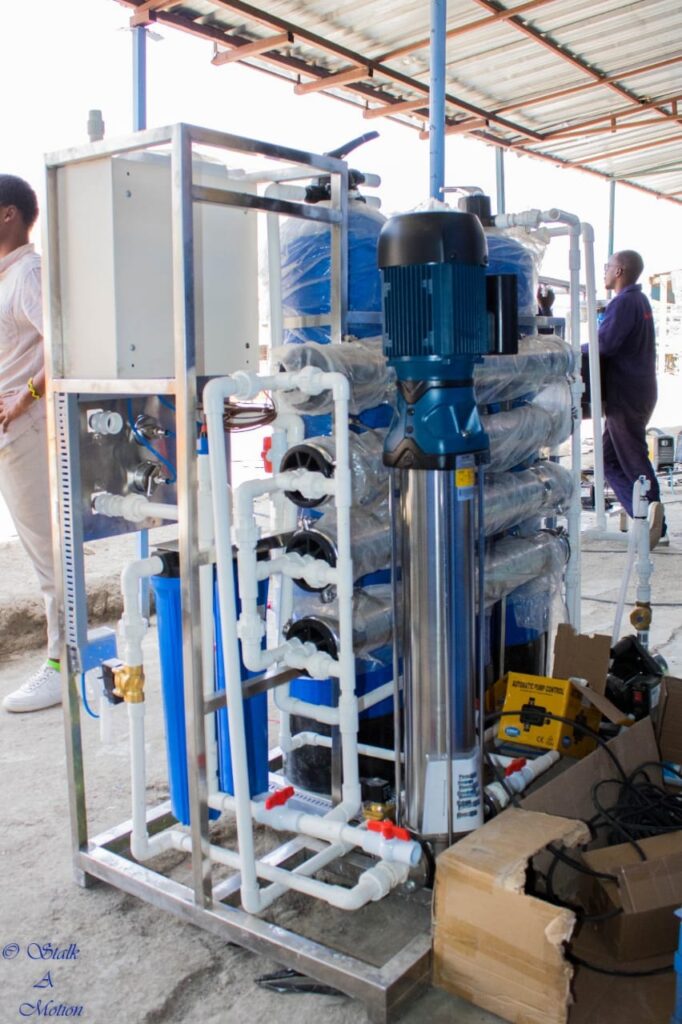
Reverse Osmosis is a water purification process that removes impurities, salts, and contaminants from water by using a semi-permeable membrane. In this process, water is forced under pressure through the membrane, which allows only pure water molecules to pass while blocking dissolved solids, bacteria, and other impurities.
RO systems are widely used for drinking water purification, industrial water treatment, and desalination (turning seawater into fresh water). The key components of a reverse osmosis system include a pre-filter (to remove sediments and chlorine), a high-pressure pump, the RO membrane, and post-filters for final polishing of the water.
Benefits of Reverse Osmosis:
-
Produces clean, safe, and great-tasting water
-
Removes up to 99% of contaminants, including heavy metals and dissolved salts
-
Reduces reliance on bottled water
-
Environmentally friendly and cost-effective
Applications:
-
Domestic drinking water systems
-
Commercial and industrial water purification
-
Food and beverage processing
-
Medical and laboratory water systems
In summary, reverse osmosis is one of the most effective and reliable methods for achieving high-quality purified water, essential for health, industry, and sustainable living.
