
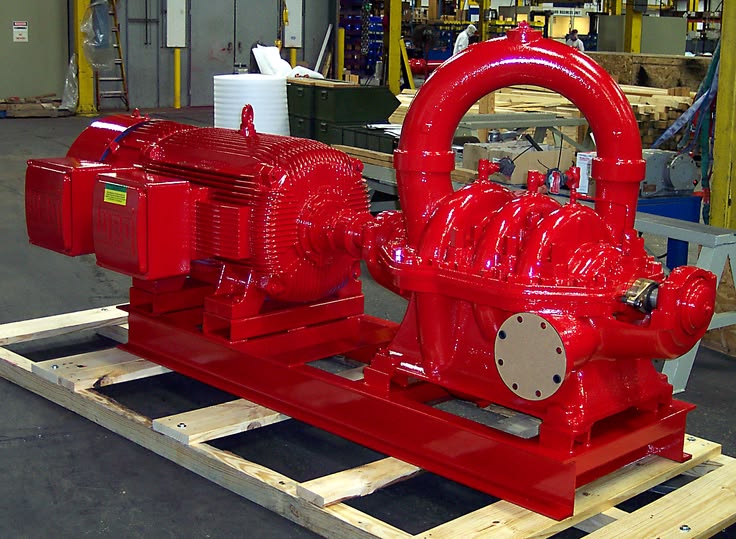
A fire pump supplies water at the pressure and flow a sprinkler or standpipe system needs when the public supply is not strong enough. It is life-safety equipment, so it is designed, installed and tested to a recognised standard. The most widely used is NFPA 20, the Standard for the Installation of Stationary Pumps for Fire Protection. This guide summarises the main requirements for fire pump system installation under NFPA 20 in plain language.
This article is an overview, not a substitute for the standard. The edition adopted by your authority having jurisdiction (AHJ) governs, and a licensed fire protection engineer should design and approve the system.
What Is NFPA 20 and Which Edition Applies?
NFPA 20 covers the selection and installation of pumps that supply liquid to private fire protection systems, including the pump, driver, controller, suction and discharge piping, power supply and acceptance testing. It is revised on a three-year cycle. The 2025 edition is listed as the current one, with revisions that include standardised use of the term “jockey pump”, clarifications on fire pump controllers and automatic transfer switches, expanded requirements for automatic and remote testing, a new requirement for an alternate power source for electrically powered components of diesel pump rooms, and clarified overcurrent protection for electric-driven pumps. Many projects are still built to the 2022 or earlier editions because authorities adopt codes with a delay, so confirm which edition applies in your project.
In Kenya, fire safety is regulated through national and county fire and building requirements, and insurers and fire authorities frequently reference NFPA standards. Confirm the requirements with the county fire authority, your insurer and the project’s fire engineer.
When Is a Fire Pump Needed?
A fire pump is required when the available water supply cannot deliver the pressure or flow demanded by the system design, for example in tall buildings, large warehouses, factories, or sites fed from a tank or low-pressure main. The system designer calculates the demand under NFPA 13 (sprinklers) or NFPA 14 (standpipes), and the fire pump is sized to meet it.
Types of Fire Pumps
Common pump types under NFPA 20 include:
- Horizontal split-case: a popular choice for larger flows, easy to maintain.
- Vertical in-line: compact, saving floor space.
- End-suction: for smaller capacity systems.
- Vertical turbine: used where water is drawn from tanks, wells or reservoirs below the pump level.
Drivers can be electric motors, diesel engines or, in some cases, steam turbines. Diesel drivers are often used where a second, independent power source is needed or the electrical supply is unreliable.
Performance Requirements
NFPA 20 requires the pump’s characteristic curve to meet specific points. In summary, a listed fire pump must deliver at least 150 percent of its rated flow at not less than 65 percent of its rated pressure, and the shutoff (churn) pressure must not exceed 140 percent of rated pressure. These points, among others, ensure that the pump still works when demand rises above the design flow. Pumps are rated at standard flows (for example 250 up to 5,000 gpm in the standard’s table, with metric equivalents in litres per minute) and must be listed and approved for fire service.
Power and driver sizing must allow the pump to run at up to 150 percent of rated flow without overloading the driver.
Water Supply and Suction Requirements
Reliable water supply is the first design check:
- The water source must supply the demand for the required duration (often one to several hours, based on the hazard classification).
- Suction piping should be short and straight, sized so that velocity at rated flow is low, with NFPA 20 giving maximum suction velocities (commonly around 4.6 m/s, or 15 ft/s, for suction at 150 percent of rated flow, with lower limits for pumps taking water above grade).
- Provide a straight run before the pump suction flange and use eccentric reducers with the flat side up, to avoid air pockets.
- Positive suction (flooded) is strongly preferred. If water comes from a tank or reservoir below the pump, a vertical turbine pump is typically used, and the submergence and intake design must follow the standard.
- Control valves in suction lines must be listed indicating valves (for example OS&Y or indicating butterfly valves) and supervised in the open position.
- Do not install a check valve in the suction line, except where the standard allows it, because it can restrict flow and cause problems.
- Avoid suction pipe arrangements that can create air entrainment or vortices.
Discharge Piping and Accessories
- A listed check valve and a listed indicating control valve in the discharge line.
- Pressure gauges on suction and discharge, with the required ranges.
- Circulation relief valve to prevent overheating when the pump runs with no demand, discharging to a visible drain.
- Main relief valve where required, such as with diesel engine drivers or variable speed arrangements that could exceed system pressure ratings.
- Flow test arrangements: a test header or a flowmeter loop (commonly with a flow-metering device) so the pump can be tested to 150 percent of its rated flow, with provision for discharging safely.
- Air release valve on the pump casing, and drain arrangements.
- Flexible couplings where needed, with proper support so pipe weight does not rest on the pump.
Pump Room Requirements
A fire pump must be protected so that fire in the building does not disable it. Typical NFPA 20 expectations include:
- A pump room that is fire-rated or separated from other areas by construction with the required fire resistance, or a detached pump house, according to the standard and local codes.
- Heating to keep the room above the minimum temperature, commonly about 5°C (40°F), so that pipes and the pump do not freeze, with higher limits for diesel engine rooms and for some controller types.
- Ventilation for heat removal, and combustion and cooling air for diesel engines, with exhaust discharged safely.
- Drainage that can handle the maximum discharge from test and relief valves.
- Lighting, including emergency lighting, and space for operation, inspection and maintenance.
- Protection of the room against flooding and ingress of water.
- Under the latest revisions, an alternate power source for the electrically powered components of a diesel pump room, such as ventilation and heating.
- Where the room is sprinkler-protected, the arrangements must follow the standard so the pump room components remain functional.
Fire Pump Drivers and Power Supply
Electric-driven pumps:
- Require a reliable power source, such as a dedicated service connection ahead of the building main disconnect, or an on-site generator arrangement meeting the standard.
- The feeder must be protected against fire damage, using fire-rated cable or other approved routing.
- Overcurrent protection must allow the motor to start and run without nuisance tripping, and the 2025 edition clarifies the requirements for it.
- Where reliability is critical, an alternate source with an automatic transfer switch (ATS) is provided.
Diesel engine-driven pumps:
- Use a listed engine with a fuel tank sized for the required run time. The standard sets minimum fuel capacity based on engine power (a widely quoted guide is about 1 gallon per horsepower, plus a margin).
- Provide batteries (typically two sets), battery chargers, engine cooling, exhaust and automatic starting.
- Keep the engine room warm enough, and its fuel and batteries serviced, to ensure starting.
Fire Pump Controllers
Controllers must be listed for fire pump service (for example to NFPA 20 and UL 218 or equivalent). Main functions include:
- Automatic start when system pressure drops, and manual start and stop.
- For electric pumps, the controller must be arranged so that a running pump is not stopped automatically in a fire, apart from a few specific conditions, since the pump must run until stopped by a person.
- Pressure sensing with the required low-pressure start settings and test provisions.
- Alarm and signal outputs, such as pump running, power failure, phase reversal and controller trouble, sent to a supervised location.
- Controllers must be located near the driver, with the required working clearances, and protected from water.
- The latest edition expands the requirements for automatic and remote testing of electric and diesel-driven pumps.
Jockey (Pressure Maintenance) Pump
A jockey pump is a small pump that maintains system pressure and makes up for minor leakage, so the main fire pump does not start for trivial pressure drops. It starts at a higher pressure setting than the main pump, and is not a substitute for the fire pump. Using it keeps the main pump from cycling and extends its life.
Variable Speed Fire Pumps
NFPA 20 includes rules for variable speed pressure limiting control and variable speed controllers. These can help in systems with pressure restrictions, but they have specific requirements for listing, bypass arrangements and redundant arrangements, which the latest edition clarifies in relation to isolation. Consult the standard and the controller manufacturer before specifying variable speed on a fire pump.
Installation Checklist
- Design basis confirmed: hydraulic demand, duration, pump rating, and the adopted edition of NFPA 20.
- Listed equipment procured: pump, driver, controller, jockey pump, valves and accessories, all approved for fire service.
- Foundation and baseplate: concrete base, levelled and grouted, with the pump and driver aligned and doweled as required.
- Piping installed to the standard, with supports, correct fittings, test header and relief discharge.
- Electrical installation: protected feeders, ATS, controller connections, alarms and earthing.
- Diesel systems: fuel tank, exhaust, batteries and ventilation.
- Pump room finished: fire separation, heating, ventilation, drainage, lighting and signs.
- Flushing: suction and discharge piping flushed to clear debris before the pump is run.
Acceptance Testing and Ongoing Care
Before handover, an acceptance test is carried out with the authority or its representative. Typically it includes:
- Checking installation against drawings and the standard.
- Running the pump at churn (no flow), at rated flow and at 150 percent of rated flow, with readings of pressure, flow, speed, current or engine data, and comparison with the manufacturer’s curve.
- Testing automatic and manual starting, the power transfer and alarm signals.
- Checking vibration, temperature, relief valve operation and the absence of leaks.
After acceptance, NFPA 25 sets out routine inspection, testing and maintenance, including frequent run tests (weekly or monthly, depending on the driver and the arrangement) and annual flow tests. Keep records of all tests, and treat any deviation from the original test results as a warning sign.
Common Problems to Avoid
- Choosing a pump without checking the adopted edition and local rules.
- Suction piping that is long, small or arranged to trap air.
- No provision for flow testing at 150 percent of rated flow.
- Poorly protected power supply or controllers located where they can flood.
- Heating or ventilation shortcuts in the pump room.
- Closed or unsupervised valves, which are a leading cause of fire system impairment.
- Skipping routine tests after commissioning.
Conclusion
Installing a fire pump system under NFPA 20 means getting many details right: a listed pump with the correct performance curve, a dependable water supply and suction arrangement, a protected pump room, a suitable driver and power source, a listed controller, proper test provisions and a documented acceptance test. Use the edition adopted in your area, work with a qualified fire protection engineer and keep up with scheduled testing, because a fire pump that has not been tested is a fire pump you cannot rely on.
Sources and Further Reading
- National Fire Protection Association, NFPA 20, Standard for the Installation of Stationary Pumps for Fire Protection: nfpa.org
- Fire-Police-EMS, “NFPA 20 2025 Edition” (summary of revisions): fire-police-ems.com
- Canadian Consulting Engineer, “Stationary pumps: new requirements”: canadianconsultingengineer.com
- Consulting-Specifying Engineer, “Fire protection pumps: Updates to NFPA 20”: csemag.com
- NFPA 25, inspection, testing and maintenance of water-based fire protection systems: nfpa.org
