
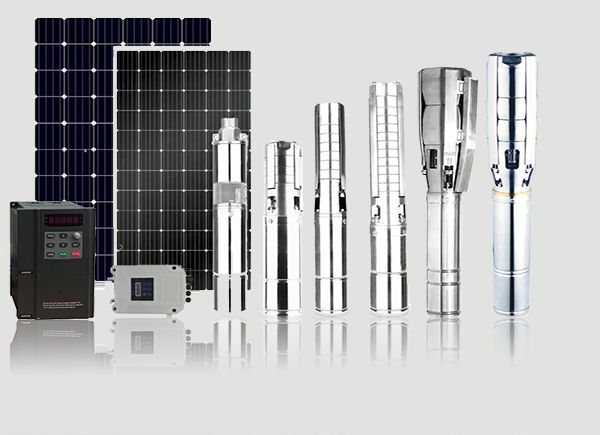
Walk into any pump supplier’s showroom and the range can feel overwhelming. Yet nearly every pump belongs to a small number of families, and understanding them makes selection far easier. This guide explains the four most common categories, which are centrifugal, submersible, booster and positive displacement pumps, how each works, where each excels and where it struggles.
How Pumps Are Classified
Engineers classify pumps in two main ways: by the principle by which they move liquid, and by the way they are installed or used.
By principle:
- Dynamic pumps (such as centrifugal and axial flow) impart velocity to liquid and convert it to pressure.
- Positive displacement pumps (such as piston, diaphragm, gear, screw and progressive cavity) trap and push fixed volumes of liquid.
By application or arrangement:
- Submersible pumps operate underwater.
- Booster pumps raise pressure in an existing line.
- Surface pumps sit above the liquid source.
These categories overlap. A submersible pump is usually centrifugal in principle. A booster set is often built from several centrifugal pumps. Thinking in both dimensions helps clarify the choices.
Centrifugal Pumps
How they work. Liquid enters the centre of a rotating impeller. The vanes throw the liquid outward, increasing its velocity. A spiral casing, called the volute, then slows the liquid and converts that velocity into pressure. The result is smooth, continuous flow.
Common configurations:
- End-suction pumps: a simple, compact design widely used for water supply, irrigation and general service.
- Split-case pumps: larger, double-suction pumps for high flow and easy maintenance.
- Multistage pumps: several impellers in series to produce high head from a single unit.
- Self-priming pumps: designed to evacuate air from the suction line and restart without manual priming.
- Vertical inline pumps: suction and discharge on the same axis, saving floor space in plant rooms.
Strengths:
- Simple construction and relatively low cost
- Smooth, pulsation-free flow
- Wide range of sizes, materials and capacities
- Good efficiency when operated near the best efficiency point
- Easy to pair with variable speed drives
Limitations:
- Flow varies with system pressure, so performance depends on the pipeline
- Poor suited to very viscous liquids, since efficiency falls sharply as viscosity rises
- Standard designs are not self-priming and can lose prime if air enters
- Vulnerable to cavitation if suction conditions are poor
- Do not meter flow accurately
Typical uses: water supply, irrigation, building services, cooling circuits, fire-fighting, general industrial transfer and clean-water process duties.
Submersible Pumps
How they work. A submersible pump and its motor are sealed together and placed below the liquid surface. The pump pushes liquid upward instead of drawing it, so it never has to overcome suction lift or worry about priming. The surrounding liquid also helps cool the motor.
Common configurations:
- Borehole submersibles: slim, multistage units fitted in narrow wells and boreholes.
- Drainage and sump pumps: handle clean or slightly dirty water in pits and basements.
- Sewage and wastewater pumps: use non-clog or vortex impellers to pass solids and fibres.
- Dewatering pumps: rugged units for construction and mining, often handling abrasive slurries.
Strengths:
- No priming or suction problems
- Quiet operation, since the unit is underwater
- Efficient lifting from deep wells
- Compact surface footprint, with only the pipe and cable above ground
- Resistant to flooding at the pump location
Limitations:
- Maintenance requires pulling the pump from the well or sump
- Motor cooling depends on sufficient liquid flow past the motor
- Cable and seal failures can be costly
- Sensitive to sand and abrasive particles unless designed for them
- Dry running can cause rapid damage
Typical uses: boreholes and wells, sewage and drainage systems, ponds and tanks, mine dewatering, and irrigation from deep or low-lying sources.
A separate article in this series compares submersible and surface pumps in detail.
Booster Pumps
How they work. A booster pump is defined by its job rather than its internal design. It takes liquid from an existing supply, such as a mains pipe or storage tank, and raises its pressure so that it reaches taps, upper floors, irrigation systems or distant users with adequate force. Most boosters use centrifugal pumps, often vertical multistage units, mounted in sets with a controller.
Common configurations:
- Single-pump boosters for small homes and light duties.
- Multi-pump sets with duty and standby pumps, sharing the load and alternating for even wear.
- Variable speed boosters that adjust pump speed to hold constant pressure as demand varies.
- Pressure vessel systems that use a small tank to reduce pump cycling.
Strengths:
- Corrects low pressure in buildings, estates, farms and industrial processes
- Variable speed units save energy at part load
- Redundancy through multiple pumps improves reliability
- Compact packaged systems with integrated controls and protection
Limitations:
- Cannot create water that is not there. Supply must be adequate at the inlet
- Direct connection to the mains may be restricted by water utility rules
- Poor control settings cause pressure swings and frequent starts
- Incorrect sizing leads to noise, wasted energy and premature wear
Typical uses: high-rise buildings, housing estates, hotels, hospitals, irrigation systems, car washes and industrial process lines. A dedicated article on booster installation follows in this series.
Positive Displacement Pumps
How they work. Instead of throwing liquid outward, a positive displacement (PD) pump traps a fixed volume and mechanically forces it through the discharge. Each stroke or rotation delivers nearly the same volume, regardless of the pressure it has to work against.
Common types:
- Reciprocating pumps (piston, plunger, diaphragm) use back-and-forth motion to create pulses of flow. They can generate very high pressures and meter fluids precisely.
- Rotary pumps (gear, lobe, vane, screw) use rotating elements to move liquid steadily, and suit oils, syrups and other viscous liquids.
- Progressive cavity pumps use a helical rotor inside an elastomer stator. They handle viscous liquids, slurries and shear-sensitive products gently, and are also used in some deep borehole applications.
Strengths:
- Nearly constant flow regardless of pressure
- Excellent for viscous liquids, where centrifugal pumps struggle
- Accurate metering, especially with diaphragm and plunger designs
- Self-priming capability in many designs
- Can generate very high pressures
Limitations:
- A closed discharge valve can cause dangerous overpressure, so a relief valve is essential
- Flow can be pulsating in reciprocating designs, requiring dampeners
- Closer clearances mean wear is more significant with abrasive liquids
- Usually more complex and more expensive to maintain than centrifugal pumps
- Not suitable for very high flow rates compared with large centrifugal pumps
Typical uses: chemical dosing, oil and fuel transfer, food and beverage processing, sludge and slurry handling, high-pressure cleaning and hydraulic systems.
Side-by-Side Comparison
| Feature | Centrifugal | Submersible | Booster | Positive Displacement |
|---|---|---|---|---|
| Operating principle | Impeller adds velocity | Usually centrifugal, underwater | Usually centrifugal, pressure raising | Traps and displaces fixed volume |
| Flow behaviour | Varies with pressure | Varies with head | Varies, often speed-controlled | Nearly constant |
| Viscous liquids | Poor | Poor | Poor | Excellent |
| Self-priming | Usually not | Not required | Not required if flooded suction | Often yes |
| Typical pressure | Low to high (multistage) | Medium to high | Medium | Very high possible |
| Maintenance access | Easy | Pump must be lifted out | Easy, packaged | Moderate to complex |
| Main strength | Versatility and cost | Deep wells and wet pits | Pressure correction | Metering and viscous duty |
How to Choose Between Them
Start with the liquid and the duty.
- Is the liquid clean, thin and free of large solids? A centrifugal pump is usually the first choice.
- Is the source below ground or in a pit? A submersible pump avoids suction lift and priming issues.
- Is the problem low pressure rather than lack of supply? A booster set is the right tool.
- Is the liquid thick, abrasive, shear-sensitive, or does it require accurate dosing? Consider a positive displacement pump.
- Does the flow demand vary widely? Variable speed centrifugal or booster sets perform well, while PD pumps may need speed control or bypass arrangements.
- What are the maintenance and reliability priorities? Simple, accessible pumps suit remote sites with limited technical support.
Always confirm the choice by calculating total dynamic head, checking the pump curve and verifying material compatibility.
Common Mistakes When Choosing a Pump Type
- Using a centrifugal pump for viscous liquids and expecting catalogue performance.
- Choosing a standard water pump for wastewater, leading to clogging.
- Ignoring suction conditions with surface pumps and suffering from cavitation.
- Deadheading a positive displacement pump without a relief valve.
- Installing a booster directly on a mains supply without checking regulations and inlet pressure.
- Selecting purely on price, which often leads to higher energy and maintenance costs.
Conclusion
Centrifugal pumps are the versatile workhorses of clean-water duties. Submersible pumps solve the problem of deep or low-lying sources. Booster pumps correct pressure where supply is available but too weak. Positive displacement pumps excel where liquids are thick, flow must be precise or pressures are very high. Understanding what each type does well, and where it falls short, lets you narrow the choice quickly and avoid costly mismatches. From there, careful sizing and good installation turn the right type of pump into a reliable system.
