
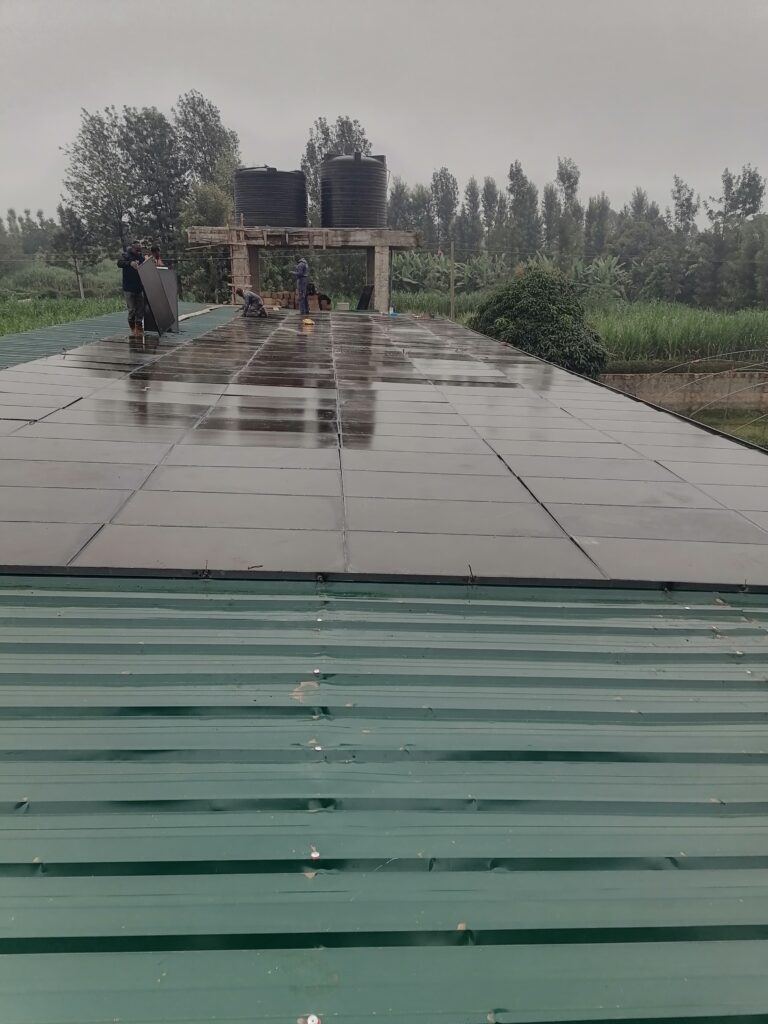
Solar panels have no moving parts, so they are often described as “maintenance free.” In practice, solar panel maintenance is what separates a system that delivers its promised energy for 25 years from one that quietly loses output, trips offline or fails early. Dust, bird droppings, loose connectors, blocked inverter vents and ageing batteries all reduce performance, and most of these issues are cheap to prevent and expensive to ignore.
This guide sets out a practical maintenance schedule, explains how to clean panels safely and describes the inspections that keep a system healthy.
Why Maintenance Pays for Itself
A well-maintained solar plant produces more energy, lasts longer and fails less often. The main reasons to maintain are:
- Recover lost energy. Soiling alone can reduce output by a few percent in moderate climates and far more in dusty or arid regions or near unpaved roads, farms and industry.
- Detect faults early. A failing connector or string can lose energy for months before anyone notices without monitoring.
- Protect safety. Loose or overheated connections are a recognised fire risk.
- Protect warranties. Many manufacturers expect evidence of reasonable care and may reject claims where damage resulted from neglect.
- Extend equipment life. Clean, cool inverters and well-managed batteries last longer.
As a planning figure, annual operation and maintenance for commercial systems is often around 0.5 to 1.5 percent of capital cost, depending on size, location and service level.
Understanding Soiling and Its Effects
Soiling is the accumulation of dust, pollen, sand, soot, bird droppings, leaves and other deposits on the glass. It reduces the sunlight that reaches the cells. Losses depend on local conditions:
- Dry, dusty regions may see significant losses between rainy periods.
- Humid or rainy regions benefit from natural washing but can still suffer from sticky deposits such as pollen and bird droppings.
- Low-tilt arrays shed dirt less effectively than steep ones, which matters near the equator where tilts are small.
- Localised soiling, such as bird droppings on a single cell, can be worse than uniform dust because it may create hot spots and reduce the output of an entire string.
The best cleaning frequency is an economic decision. Compare the value of recovered energy against the cost of cleaning. Many plants find that two to four cleanings a year is sensible in moderate climates, while very dusty sites may justify monthly cleaning. Measuring soiling with a simple reference cell or by comparing clean and dirty panels helps set the right interval.
Cleaning Best Practices
Cleaning is simple but easy to get wrong. Poor technique can scratch glass, damage anti-reflective coatings or create safety hazards.
Choose the right time. Clean early in the morning, late in the evening or on overcast days. Cold water on hot glass can cause thermal stress, and rapid evaporation leaves streaks.
Use soft tools. Use a soft brush, microfibre cloth or sponge, ideally on a telescopic pole. Avoid scouring pads, steel wool, squeegees with hard edges and high-pressure jets.
Use the right water. Clean, low-mineral water such as soft or deionised water prevents spots and mineral build-up. Hard water can leave scale on the glass over time. Where water supply is limited, waterless cleaning methods and robotic systems may be useful.
Use mild cleaning agents only. Plain water is usually enough. For stubborn grime, use a small amount of neutral, non-abrasive, non-corrosive detergent that is approved by the module manufacturer. Avoid solvents, strong acids and alkalis.
Do not use high pressure. Pressure washers can force water into junction boxes, frames and seals and may damage cells or coatings. Low-pressure rinsing is safer.
Respect electrical safety. Treat panels as live whenever there is light. Do not spray water on damaged modules, exposed wiring or open junction boxes, and never clean during thunderstorms.
Work safely at height. Rooftop cleaning requires fall protection, safe access and awareness of fragile roof sheeting. Never walk on panels. Ground-mounted systems are easier and safer to clean.
Consider specialised cleaning. Large plants may use cleaning vehicles or autonomous robots, which reduce labour and water use. Hydrophobic coatings may reduce dirt adhesion but should be applied only if the manufacturer confirms they do not affect warranty.
A Practical Maintenance Schedule
The following schedule is a sensible starting point and can be tailored to the site and equipment.
Monthly checks
- Review the monitoring portal for production, alarms and underperforming strings.
- Compare actual energy with expected energy for the weather conditions.
- Walk the site and inspect visually for shading, vegetation, damaged panels and animals nesting under arrays.
- Check inverter displays for fault codes.
Quarterly tasks
- Clean panels according to the soiling pattern, or as indicated by performance data.
- Inspect inverter ventilation, fans and filters, and clear dust.
- Check for loose cables, damaged conduit and signs of rodent or insect activity.
- Trim vegetation that may shade the array or create fire risk.
- Inspect the roof or ground around the array for leaks, erosion or settlement.
Annual tasks
- Carry out a full visual inspection of modules, frames, glass, backsheets and junction boxes, noting cracks, delamination, discolouration and corrosion.
- Check and, where specified, re-torque mounting hardware, clamps and electrical terminals.
- Inspect DC and AC cabling, connectors and glands for heat damage, UV degradation and moisture ingress.
- Test earthing and bonding continuity and, if required, earth resistance.
- Verify surge protection devices and indicators.
- Inspect and test circuit breakers, isolators and fuses.
- Perform thermal imaging of modules, combiner boxes and electrical panels to find hot spots and failing connections.
- Measure string voltage and current, and, where appropriate, run current-voltage (IV) curve tracing on selected strings.
- Check monitoring equipment, sensors and communication links.
Every few years
- Replace inverter fans, filters and consumable parts according to manufacturer guidance.
- Review inverter warranties and plan for replacement, as inverters often last 10 to 15 years, shorter than modules.
- Reassess structural fixings and corrosion protection, especially in coastal or industrial environments.
- Review the overall performance ratio and compare it with design expectations.
Battery System Maintenance
For hybrid or off-grid systems, batteries need extra attention.
- Lithium iron phosphate (LFP) batteries need little routine work, but should be monitored for temperature, state of charge, cell balance and alarms. Keep them in a ventilated, temperature-controlled space.
- Lead-acid batteries need regular checks of electrolyte levels (for flooded types), terminal cleanliness, specific gravity and equalisation charges according to manufacturer recommendations.
- Battery management systems should be checked for firmware updates, alarms and logged events.
- Operating temperature matters greatly. High temperatures shorten battery life, so shading, ventilation or air conditioning for the battery room can pay off.
Inverter and Electrical Equipment Care
Inverters are the most failure-prone major component in a solar system. To keep them healthy:
- Keep vents and fans clear of dust, insects and nests.
- Ensure adequate shading and airflow, since heat reduces efficiency and lifespan.
- Check for error logs and repeated trips, which may indicate grid problems, insulation faults or failing components.
- Tighten loose terminations during scheduled shutdowns.
- Keep firmware up to date according to the manufacturer’s advice.
Distribution boards, isolators and protection devices should be inspected for discolouration, corrosion, moisture and heat damage.
Using Monitoring Data to Drive Maintenance
Modern monitoring systems turn maintenance from guesswork into a data-driven process. Useful indicators include:
- Specific yield (kilowatt-hours per kilowatt-peak), which allows comparison across systems and over time.
- Performance ratio, which compares actual to theoretical output after accounting for irradiance and temperature.
- String-level current, which reveals shading, soiling or faults on individual strings.
- Alarm history, which helps identify recurring issues.
Set automatic alerts for sudden drops in output, inverter faults and communication loss. A system that notifies you within a day of a fault will lose far less energy than one discovered at the next quarterly visit.
Record Keeping and Documentation
Keep a maintenance log that records dates, tasks, findings, measurements and corrective actions. Retain commissioning records, as-built drawings, equipment datasheets and warranty documents. Good records make fault diagnosis faster, support warranty claims and add value if the system is sold or financed.
When to Use Professional Services
Many tasks, such as light cleaning and visual checks, can be done by trained site staff. Electrical testing, thermal imaging, IV curve tracing, inverter repair and structural inspection should be performed by qualified technicians. For commercial plants, an operation and maintenance contract with clear response times, reporting and performance guarantees often gives the best balance of cost and reliability.
Conclusion
Solar panels may be low maintenance, but they are not no maintenance. A simple routine of monitoring, timely cleaning, regular inspection and prompt repair protects your energy output, your equipment and your investment. Build a schedule that fits your site, clean carefully with soft tools and clean water, track performance data and act quickly on faults. The result is a solar system that continues to deliver reliable, clean energy for decades.
