
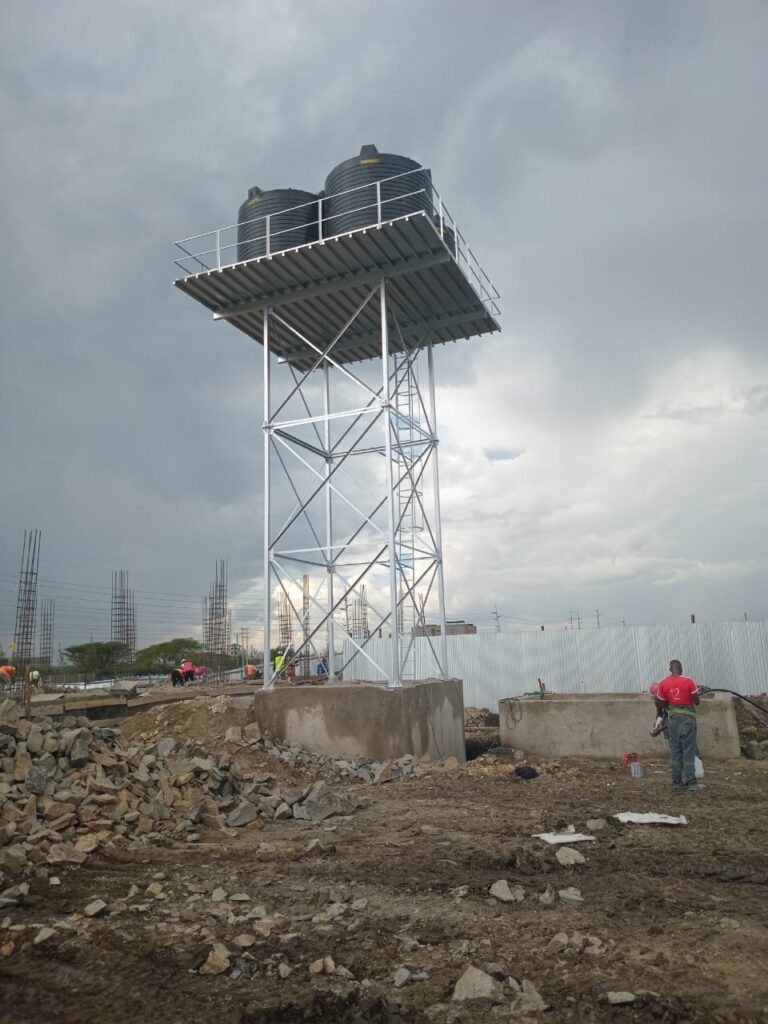
A tall tower that is easy to see from the ground can be nearly invisible to a pilot at dusk, in haze or against a hillside. Aviation obstruction marking, using lights and paint, makes towers visible and helps prevent collisions with aircraft, including helicopters, crop-spraying planes and low-flying search and rescue flights. This article summarises the principles behind obstruction lighting and painting, the types of lights used, and the process of getting approval in Kenya.
Why Marking Is Required
Towers, masts, chimneys, wind turbines and power lines can be hazards to air navigation. International rules require authorities to assess structures that might be obstacles and to mark them where necessary. The ICAO Annex 14, Volume I, Chapter 6, sets global recommendations for marking and lighting of objects, and national authorities such as the Kenya Civil Aviation Authority (KCAA) apply them through their own regulations and circulars. Always confirm requirements with KCAA, since national rules may differ in detail.
When Is a Tower Considered an Obstacle?
Authorities evaluate each structure against several criteria:
- Height above ground: structures of 45 m and above are generally marked and lit, and lower objects may need marking if they are near airfields.
- Location: towers within the obstacle limitation surfaces (OLS) of an aerodrome, such as the approach, take-off, and transitional surfaces, will face stricter rules.
- Terrain: structures on hilltops or ridges may need marking even if less than 45 m above ground.
- Flight routes: towers near helicopter routes, hospitals, tourist airstrips, or farmland with agricultural aircraft may need marking.
- Surrounding obstacles: a shorter tower next to other lit structures may need less marking.
An aeronautical study can determine whether a structure is a hazard and which marking is needed.
Types of Obstruction Lights
ICAO defines low, medium, and high intensity lights.
Low-intensity lights
- Type A: fixed red light, minimum intensity 10 cd. Used on objects less than 45 m high.
- Type B: fixed red light, intensity 32 cd. Used on objects less than 45 m high where more visibility is needed.
- Type C: flashing red light on vehicles.
Medium-intensity lights
- Type A: flashing white, 20,000 cd (day and twilight) and 2,000 cd at night.
- Type B: flashing red, 2,000 cd.
- Type C: fixed red, 2,000 cd.
Medium-intensity lights are used on structures between about 45 m and 150 m high.
High-intensity lights
- Type A: flashing white at 200,000 cd by day, reducing at twilight and night. Required for the tallest structures above 150 m, with dual-intensity operation.
- Type B: flashing white, 100,000 cd.
Placement of Lights
Typical practice includes:
- Top light: one or more lights at the highest point of the structure, positioned so that the object is lit from all directions.
- Intermediate levels: additional lights at intervals not exceeding about 45 to 52 m between the top and the ground, depending on the type.
- Two lights at each level: for redundancy and 360-degree visibility. If one fails, the other still operates.
- Horizontal coverage: the lights must be visible from all directions of approach.
- Antenna and lightning rod: the top light should be mounted at the top, but may sit just below if there is a thin antenna extending above, subject to approval.
Aviation Painting and Marking
Daytime marking uses contrasting colours so the structure stands out against the sky or landscape. ICAO guidance recommends:
- Colour: alternating bands of aviation orange (international orange) and white.
- Pattern: the top and bottom bands are orange; bands are of equal width, generally not exceeding one-seventh of the length of the longest dimension or 30 m, whichever is less.
- Coverage: typically the top portion of a tower or the full height, depending on the structure and the authority.
- Durability: use quality paint that resists UV, with periodic repainting to keep colours bright.
Where paint is not practical, flags, markers or high-intensity lights may be accepted as alternatives. White strobe lights can sometimes be used in daytime instead of paint on tall structures, to reduce visual impact.
Painting over galvanizing requires proper surface preparation, so the paint bonds well and the combined system gives long service, as described in the article on corrosion prevention.
Power Supply and Control
Obstruction lighting must remain reliable.
- Dual power sources: mains with battery or solar backup, since lights must operate during outages.
- Photocell control: automatically switches lights on at dusk and off at dawn, or between intensity modes.
- Monitoring systems: remote alarms report failures to the operator, so maintenance can be arranged quickly.
- Light failure rules: authorities usually require failed lights to be repaired promptly, and may require a notice to air navigation (NOTAM) if a light is out of service for an extended period.
- LED technology: has largely replaced incandescent lamps, offering long life, low power, and reduced maintenance, which suits remote sites and solar-powered systems.
- Lightning protection: lights and cables must be protected with SPDs and bonded to the earthing system.
Approval Process in Kenya
While details can change, the typical process involves:
- Pre-application assessment. Determine the location, coordinates, ground elevation, and structure height.
- Application to KCAA for an obstacle assessment or approval, often together with planning applications to the county.
- Aeronautical review. KCAA reviews the proposal against obstacle limitation surfaces and nearby airports and airstrips.
- Conditions. KCAA may specify the lighting and marking required, height limits, or relocation.
- Installation and inspection. After construction, lights and markings are checked for compliance.
- Ongoing compliance. The owner maintains lighting, repaints as needed, and notifies the authority about changes or outages.
Developers should apply early in the project, since approval may affect tower height and location.
Maintenance Requirements
- Daily or remote monitoring of lights.
- Periodic cleaning of lenses and replacement of failed LEDs.
- Testing of batteries and photocells.
- Inspection of paint every year or two, with repainting when colours fade or chalk.
- Record-keeping of outages, repairs, and inspections for audits.
Maintenance often needs climbing, so it should be integrated into the overall tower inspection programme.
Common Problems
- Lights that are blocked by antennas or equipment.
- Failed bulbs or drivers not repaired quickly.
- Power loss without backup.
- Faded paint that no longer contrasts.
- Lightning damage to unprotected lights.
- Missing approvals before construction.
Conclusion
Obstruction lighting and painting protect aircraft and tower owners alike. Determine early whether your tower needs marking, design the lighting layout, power supply, and paint scheme to ICAO and KCAA requirements, and maintain them diligently. A properly marked tower is safer for aviation and avoids penalties, delays, and liability.
Key references: ICAO Annex 14 Vol. I, Chapter 6; ICAO Aerodrome Design Manual Part 4; Kenya Civil Aviation Regulations and KCAA guidance.
