
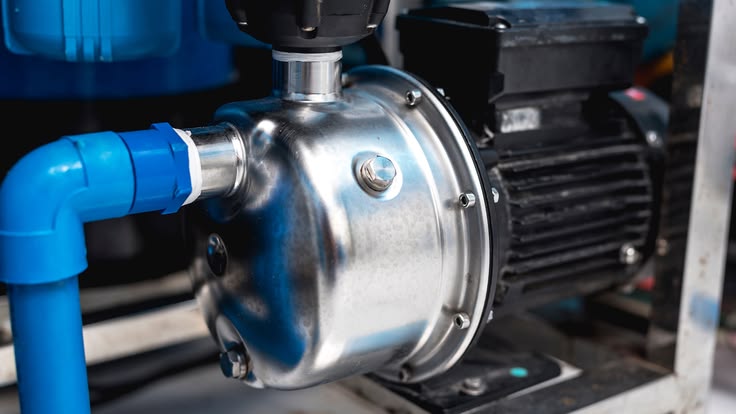
Planned pump maintenance is the cheapest way to keep pumps running. A short daily walk-round, a more detailed monthly check and a thorough annual service will catch most faults while they are still small. Use this pump maintenance checklist as a starting template, then adjust it to your pump type, duty and the manufacturer’s manual, which always takes priority.
Why a Maintenance Schedule Matters
Most pump failures give warning signs first: a new noise, a small leak, a rising temperature, or a gradual loss of pressure. A schedule makes sure someone looks regularly, records what they see and acts before the pump fails. Benefits include fewer breakdowns, lower energy use, longer seal and bearing life and a record that helps with warranty claims and budgeting.
Safety First
Before any inspection that involves touching or opening equipment:
- Isolate the electrical supply and lock and tag it out.
- Close and lock suction and discharge valves where needed, and release pressure.
- Allow hot parts to cool, and treat pumped liquid as hazardous until you know otherwise, especially wastewater and chemicals.
- Wear suitable protective equipment, and follow confined-space procedures for pits and sumps.
- Never run a pump with guards removed.
Daily Checklist (Operator Walk-Round, 5 to 10 Minutes)
Check while the pump is running, without opening anything:
- [ ] Listen: any new noise, such as grinding, rattling, knocking or a crackling cavitation sound.
- [ ] Look for leaks: at the seal, glands, flanges, pipe joints and casing. Note the leak rate. A mechanical seal should show little or no leakage.
- [ ] Check pressures: suction and discharge gauges against normal readings. A falling discharge pressure or a fluctuating suction pressure is a warning.
- [ ] Check flow or output: tank level, flow meter or delivery to the user.
- [ ] Check temperature by feel or infrared gun: bearings and motor. If you can’t hold a hand on them, measure the temperature and compare with the normal value.
- [ ] Check motor current and voltage on the panel display, if available, against nameplate values.
- [ ] Check the control panel: alarms, trips, indicator lamps and switch positions (Hand/Off/Auto).
- [ ] Check vibration by touch or with a handheld meter for any obvious increase.
- [ ] Check the surroundings: no debris at the intake, clear access, no water on the floor, adequate ventilation and temperature in the pump room.
- [ ] Record the readings in the log.
Monthly Checklist
- [ ] Inspect seals and packing. For packed glands, check that a slight drip is present and adjust gland nuts evenly. For mechanical seals, check for leakage, and check any flush or cooling lines.
- [ ] Check bearing lubrication. Check oil level and colour in oil-lubricated bearings, and look for water or contamination. Grease only to the manufacturer’s schedule and quantity. Over-greasing damages bearings.
- [ ] Measure vibration at the bearing housings and compare with the baseline and previous readings. Investigate any large change, such as a doubling from the as-new value.
- [ ] Measure bearing and motor temperatures and compare with limits.
- [ ] Check coupling and guard. Look for wear, cracks, loose bolts and missing guards.
- [ ] Check anchor bolts and baseplate for looseness, cracks or grout damage.
- [ ] Inspect pipework and supports. Look for leaks, corrosion, loose clamps and any sign that pipes are straining on the pump.
- [ ] Exercise standby pumps. Run standby and rarely used pumps for a short period to keep them free and test the controls and alternation. Fire and emergency pumps have their own, more frequent test rules.
- [ ] Test protection and controls. Check float switches, level probes, pressure switches, alarms and the emergency stop. Verify that low-level or dry-run protection works.
- [ ] Check electrical connections. Look for discolouration, loose terminals and heat damage, using an infrared camera if available. Only qualified electricians should open live panels.
- [ ] Clean strainers, screens and suction inlets.
- [ ] Check valves. Operate isolation valves to prevent seizing, and check that non-return valves are not leaking or slamming.
- [ ] Check for air leaks on suction pipes and glands, which cause noise and lost performance.
- [ ] Clean the pump room, floor drains and sump, and check the ventilation.
- [ ] Update the records, including any repairs and parts used.
Quarterly and Six-Monthly Additions (Optional)
- Check motor insulation resistance with a megohmmeter, and compare against previous readings.
- Check the tension and wear of any belts or drives.
- Test emergency lighting and safety equipment.
- Review log trends for current, pressure and vibration.
- Inspect tanks, pressure vessels and air charges on booster sets and hydropneumatic tanks.
Annual Checklist (Planned Shutdown)
- [ ] Performance test. Measure flow, head, power and efficiency, and compare with the original pump curve and previous tests. A drop in head or efficiency suggests wear.
- [ ] Alignment check. Re-check shaft alignment with a laser or dial indicator, and correct as needed. Check for soft foot.
- [ ] Bearing service. Replace or re-lubricate bearings according to the schedule, or when vibration or temperature trends demand. Replace grease or oil, and check housings and seals.
- [ ] Mechanical seal inspection. Check faces, springs and elastomers, and replace if worn or if leakage has been increasing.
- [ ] Inspect the impeller, casing and wear rings. Look for erosion, corrosion, cavitation pitting and clearance wear. Replace wear rings when clearances exceed the manufacturer’s limits, because worn rings reduce efficiency and NPSH margin.
- [ ] Inspect the shaft or shaft sleeve for scoring and runout.
- [ ] Check and test the motor. Insulation resistance, winding resistance, current balance and bearing condition. Clean cooling fins and fan covers.
- [ ] Service the control panel. Tighten terminals, clean dust, check contactors and overload relay settings, test phase-failure and protection devices, and inspect surge protection.
- [ ] VFD or soft starter maintenance. Clean filters and heat sinks, check fans, check parameter settings and back them up.
- [ ] Service valves. Overhaul or replace worn isolation and check valves, and test relief valves and air valves.
- [ ] Inspect pipework, supports and expansion joints, and repaint or repair corrosion protection.
- [ ] Inspect the intake or sump, including level sensors, screens, and any vortex-control devices. Remove silt and debris.
- [ ] For submersible pumps: pull the pump at the intervals recommended by the manufacturer or when performance falls, inspect the pump end, cable, cable joints and riser pipe, and check the borehole for sand and water-level changes.
- [ ] Review spares. Check that critical spares are on hand and in good condition: seals, bearings, couplings, wear rings, gaskets, fuses and a spare motor or pump for critical duties.
- [ ] Review the records and plan upgrades, such as better seals, VFDs, monitoring or right-sizing the pump.
- [ ] Update the pump’s asset register, drawings and operating instructions.
Extra Points for Different Pump Types
Submersible borehole pumps: monitor water level, flow and current. A rising current with falling flow can indicate wear or sand damage. Check that the cable and panel earthing are sound.
Sewage and wastewater pumps: inspect for rag build-up, check impellers for clogging, test seal-leak and temperature sensors, and clean wet wells regularly.
Fire pumps: follow the specific inspection, testing and maintenance rules for your jurisdiction, commonly based on NFPA 25, which require weekly and monthly tests.
Booster and hydropneumatic sets: check pressure vessel pre-charge, pressure switch settings and cycling frequency.
Irrigation pumps: clean intake screens, check for air leaks, drain pumps before frost or long idle periods and check engine oil, filters and fuel on engine-driven pumps.
Keeping Good Records
For each pump, keep a file with:
- Make, model, serial number, duty point and pump curve.
- Commissioning data and baseline vibration, current and pressures.
- The maintenance log with dates, readings, work done and parts used.
- Failure history and root-cause notes.
- Spare parts list and supplier contacts.
Trends matter more than single readings, so plot current, vibration and pressure over time.
Conclusion
A pump maintenance checklist turns good intentions into routine. Daily walk-rounds catch leaks, noise and abnormal readings, monthly checks keep lubrication, seals, controls and standby pumps in order, and annual service restores alignment, clearances and performance. Adapt the list to your equipment, follow the manufacturer’s instructions, keep records and act on trends, and your pumps will reward you with longer life and lower running costs.
Sources and Further Reading
- Hydraulic Institute, pump maintenance and operation guidance: pumps.org
- Water Technology, “Understanding Vibration Can Help Prevent Pump Failures”: watertechonline.com
- National Fire Protection Association, NFPA 25 (inspection, testing and maintenance of water-based fire protection systems): nfpa.org
- Pumps & Systems, pump reliability and maintenance articles: pumpsandsystems.com
