
Whether you are equipping a new borehole, upgrading a farm water supply or boosting pressure in a building, the first question is what the job will really cost. Pump installation cost in Kenya depends on the pump type and size, the depth or head it must work against, the electrical supply, and the pipes, tank and controls around it. This guide gives indicative 2026 price ranges, shows where the extra costs hide, and explains how to compare quotes.
Prices come from Kenyan supplier and installer guides published in 2026. They are indicative, they vary by brand and location, and the sources are commercial websites rather than official price lists. Always get at least three itemised quotes.
What Determines the Cost of a Pump Installation?
Five factors drive most of the price:
- Pump type: submersible, surface (centrifugal), booster or solar.
- Power and head: the pump must lift water from its depth and push it to the tank, so a deeper borehole or higher tank needs a bigger, costlier pump.
- Flow rate: how many cubic metres per hour you need.
- Electrical supply: single-phase or three-phase, distance to the nearest power line, and the control panel.
- Accessories: riser pipe, cable, tank, tower, valves, float switches and protection devices.
Submersible Pump Prices in Kenya
Submersible pumps sit inside the borehole and are the standard choice for deep water. A July 2026 price guide from a Kenyan supplier lists these indicative ranges for single-phase electric units:
| Pump size | Indicative price (KES) |
|---|---|
| 0.5 HP | 15,000 – 23,000 |
| 1 HP | 20,000 – 28,000 |
| 1.5 HP | 26,000 – 36,500 |
| 2 HP | 32,000 – 43,800 |
| 3 HP and above | 35,000 – 80,000+ |
The same guide links price to borehole depth:
| Borehole depth | Typical pump | Indicative price (KES) |
|---|---|---|
| 0–50 m | 0.5–1 HP | 15,000 – 30,000 |
| 50–100 m | 1–2 HP | 30,000 – 60,000 |
| 100–150 m | 2–3 HP | 60,000 – 90,000 |
| 150–200 m | 3–5 HP | 90,000 – 150,000 |
| 200 m and deeper | 5 HP and above | 150,000 – 250,000+ |
Treat these as a guide. The same source gives slightly inconsistent summary figures elsewhere, which is a reminder that listed prices differ between sellers and over time.
Solar Pump Systems
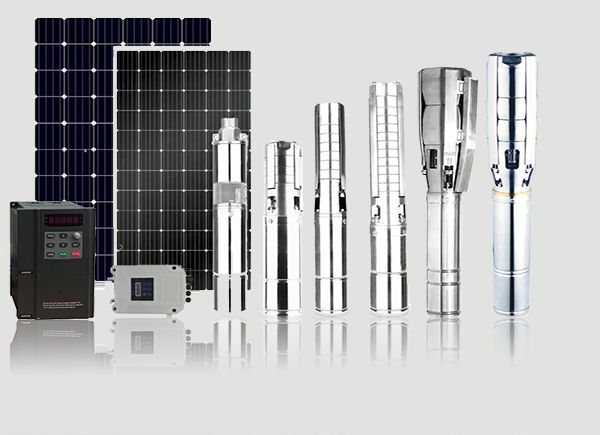
A complete solar submersible system, with the pump, solar panels and a pump controller, is reported at roughly KES 100,000 to 150,000 or more, depending on pump size, number of panels and controller capacity. Solar costs more upfront than a plain electric pump because of the panels, but it removes electricity bills and works where there is no grid. For sites far from power lines, the saving on a utility connection can outweigh the premium.
A Worked Example: Equipping a Borehole
A borehole-cost guide gives a sample installation for a 120 m borehole near Nairobi:
| Item | Cost (KES) |
|---|---|
| 0.75 HP submersible pump with fittings | 65,000 |
| Electrical work (starter panel and cable) | 25,000 |
| Water tank and piping | 40,000 |
| Pump installation subtotal | 130,000 |
In that example the pump installation was only part of a total project of about KES 769,000, because drilling, casing and testing dominate the cost. The guide puts typical full borehole projects in the range of KES 280,000 to 850,000 depending on depth and terrain.
Costs That Are Easy to Forget
- Power connection: if there is no nearby supply, bringing power to the site was estimated at KES 80,000 to 200,000, which is why solar is often considered.
- Water storage tank: KES 40,000 to 120,000, depending on size and material.
- Tank stand or tower: needed if you rely on gravity distribution.
- Permits and registration: the guide cites roughly KES 15,000 for the water resources permit and KES 5,000 for borehole registration, plus processing time of several weeks. Confirm current fees with the Water Resources Authority (WRA).
- Geophysical survey: KES 25,000 to 40,000 where a survey is done before drilling.
- Access road: if the rig or delivery truck cannot reach the site.
- Control panel, protection and metering: often a few tens of thousands of shillings for good-quality starters, overload and dry-run protection.
The same guide suggests budgeting an extra 15 to 20 percent above the drilling cost for permits and supporting infrastructure.
Surface and Booster Pumps
Surface pumps sit above ground and suit shallow wells, tanks, rivers and pressure boosting. They are generally cheaper to buy and easier to service than submersibles, but they can only draw water up a limited suction lift (in practice only a few metres, less at high altitude). Prices vary widely by brand and duty, so ask for a quote that states flow, head and motor power rather than just the model name.
Running Costs: Electric vs Solar
A pump’s electricity use is simple to estimate: kilowatts multiplied by hours. A 1.5 kW pump running four hours a day uses about 6 kWh daily. At an illustrative KES 20 per kWh, that is roughly KES 120 per day, or about KES 3,600 per month. Your actual cost depends on your tariff. A solar pump has no energy bill, but you should budget for eventual replacement of the pump (commonly after several years of service, depending on water quality and duty) and occasional controller repairs.
How to Get a Fair Quote
- Provide the facts: borehole depth, static and pumping water levels, tested yield, daily water demand, tank location and height, and power availability.
- Ask for an itemised quote: pump brand and model, motor power, flow and head at the duty point, cable size, riser pipe type, panel and protection, labour, and warranty.
- Check the duty point: the quote should show that the pump delivers your required flow at your total head, not just that it has a certain horsepower.
- Compare warranties and spares availability: pumps from brands with local service are cheaper to keep running.
- Check qualifications: use a contractor with experience in borehole equipping, and for solar-powered pumps, installers licensed by EPRA.
- Be wary of very low prices: undersized cable, no dry-run protection or used equipment sold as new are common ways quotes are cut.
Ways to Reduce Installation and Lifetime Cost
- Size the pump correctly. An oversized pump wastes energy and wears faster.
- Add dry-run and overload protection, which are cheap compared with a burnt-out motor.
- Use a larger tank to run the pump in fewer, longer cycles.
- Consider a variable frequency drive for large or variable duty (see our guide to VFDs for pumps).
- Choose solar if you are far from the grid or pump mainly in daytime.
- Plan routine maintenance so that a small fault does not become a replacement.
Conclusion
Pump installation cost in Kenya ranges from around KES 15,000 for a small shallow-well pump to well over KES 150,000 for deep or solar systems, and the full project cost is often much higher once electrical work, tanks, permits and power connection are added. Define your flow and head, ask for itemised quotes, and compare duty points and warranties as well as prices.
Sources and Further Reading
- Raeli Hydro Engineering, “How Much Submersible Pumps for Boreholes in Kenya Cost on Average” (2026): raelihydro.com
- BoreholeQuotes, “How Much Does Borehole Drilling Cost in Kenya? (2026 Price Breakdown)”: boreholequotes.co.ke
- Water Resources Authority (WRA), Kenya: wra.go.ke
- Energy and Petroleum Regulatory Authority (EPRA), Kenya: epra.go.ke
