Don't miss our holiday offer - up to 20% OFF!

Applications of Steel Towers in Communication, Power, and Water Projects

Steel towers are the unsung heroes of modern infrastructure. From supporting telecommunication signals across vast landscapes to carrying high-voltage power lines and holding elevated water tanks, these structures play a vital role in industrial, commercial, and public utility projects. In Kenya and across East Africa, the growing demand for connectivity, electricity, and water distribution has significantly increased the need for reliable and durable steel towers.
This article explores the diverse applications of steel towers, their engineering design principles, and why they remain a preferred choice for robust and long-lasting structural solutions.
1. Steel Towers in Communication Infrastructure
The telecommunication sector heavily depends on steel towers to provide the physical framework for antenna systems. These towers enable signal transmission for mobile networks, radio communication, and data transfer.
a. Types of Communication Towers
-
Lattice Towers: Triangular or square frameworks built with angle steel sections, offering high strength-to-weight ratios.
-
Monopole Towers: Single-tube structures suitable for urban areas with limited space.
-
Guyed Towers: Supported by steel cables, making them cost-effective for rural installations.
Each design type serves specific purposes depending on coverage area, terrain, and load requirements.
b. Importance of Steel Towers in Telecommunication
Steel towers are critical for maintaining consistent communication coverage across Kenya’s varied terrain. They are resistant to environmental stress, have high load-bearing capacity, and can support multiple antennas at different elevations. The durability of steel, combined with protective galvanization, ensures that these towers withstand wind, rain, and UV exposure for decades.
2. Steel Towers in Power Transmission
In energy infrastructure, steel towers are essential for supporting overhead transmission and distribution lines. As Kenya expands its electricity grid through projects such as the Last Mile Connectivity Programme and regional interconnection lines, the demand for well-engineered steel lattice towers has increased significantly.
a. Structural Role in Power Distribution
Transmission towers maintain clearance between conductors and the ground, preventing electrical hazards while ensuring efficient energy transfer. They are designed to resist environmental loads like wind pressure, ice accumulation, and conductor tension.
b. Types of Transmission Towers
-
Suspension Towers – Carry conductors in a straight line with minimal stress.
-
Tension Towers – Anchor points where lines change direction or terminate.
-
Transposition Towers – Adjust phase sequences for balanced power flow.
c. Engineering and Safety Considerations
Designing steel transmission towers requires careful analysis of loading conditions, soil bearing capacity, and local wind speeds. Engineers must comply with international standards such as IEC and ASCE codes to ensure structural stability and safety.
3. Steel Towers in Water Projects
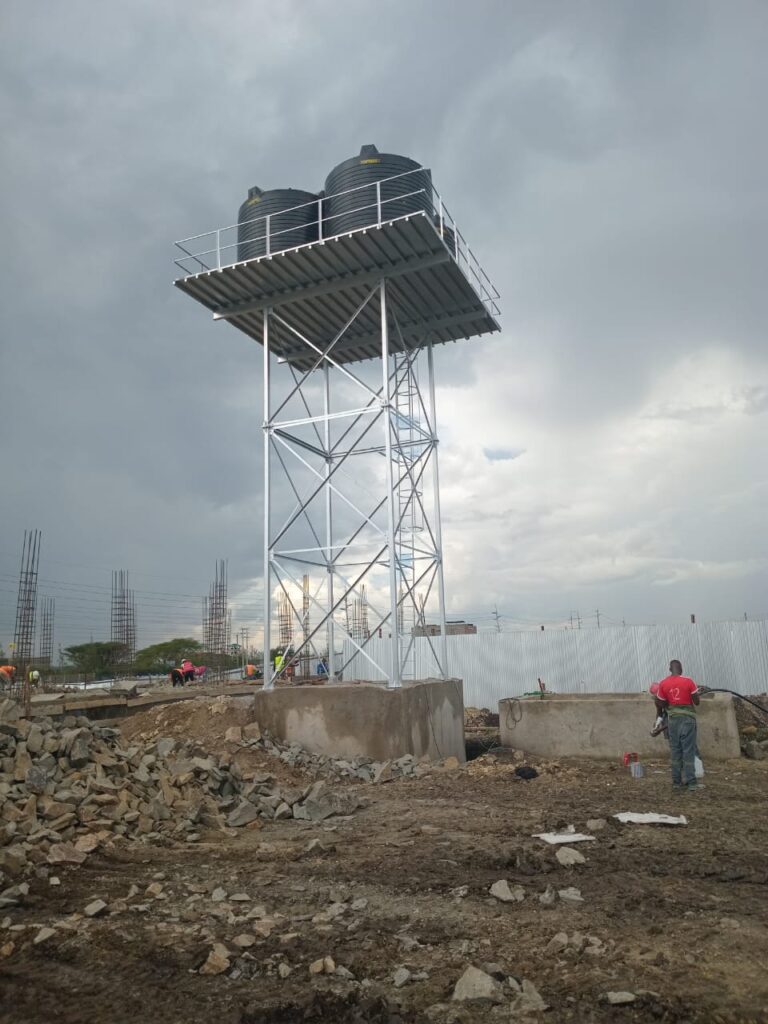
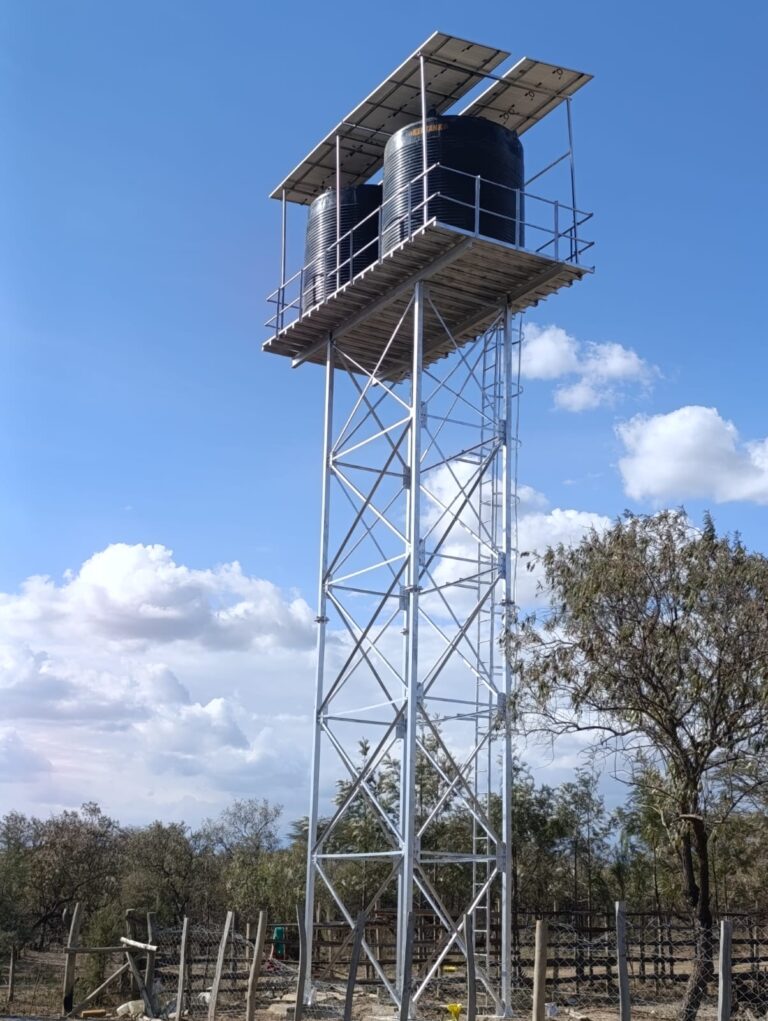
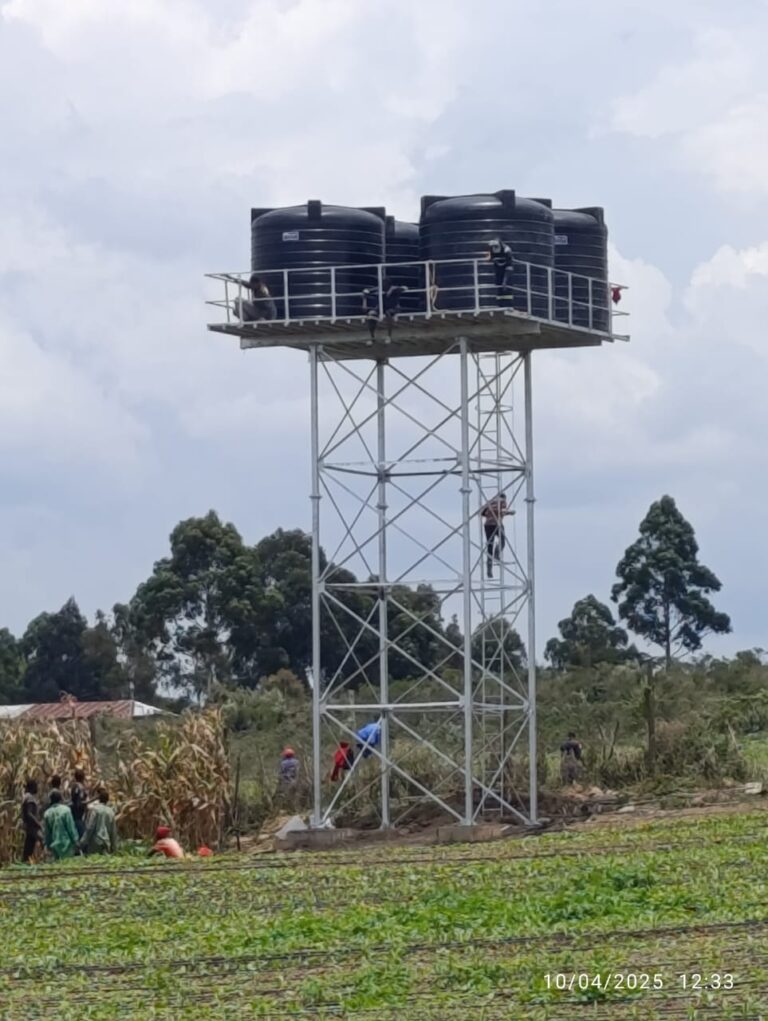
Water storage and distribution systems also rely on steel towers — particularly for elevated water tanks that provide consistent water pressure. These towers are commonly seen in municipal water schemes, irrigation projects, and industrial facilities.
a. Functionality
The height of a water tower creates gravitational pressure, ensuring water flow even during power outages. Steel frameworks offer the necessary strength to safely support large volumes of stored water.
b. Advantages of Steel Water Towers
-
High load-bearing capacity
-
Resistance to corrosion (especially when galvanized)
-
Faster installation compared to concrete alternatives
-
Modular design allows for scalability
c. Integration with Solar and Smart Monitoring Systems
Modern water towers now incorporate solar power for pumping systems and IoT-based sensors to monitor water levels and pressure in real time — improving efficiency and reducing operational costs.
4. Why Steel Towers Are the Preferred Structural Choice
a. Strength and Durability
Steel offers one of the highest strength-to-weight ratios of any construction material, making it ideal for tall and slender structures like towers.
b. Ease of Fabrication and Assembly
Steel components can be prefabricated, transported, and assembled on-site quickly. This reduces construction time and minimizes disruption to surrounding areas.
c. Cost-Effectiveness
Though the initial cost of steel may be higher than other materials, its long lifespan, low maintenance needs, and recyclability make it a cost-efficient investment.
d. Environmental Sustainability
Steel is recyclable and reusable, aligning with Kenya’s growing emphasis on sustainable engineering and green infrastructure development.
5. Geovista’s Expertise in Steel Tower Engineering
At Geovista Engineering and Consultants Services Limited, we design, fabricate, and install custom steel towers for various sectors — including telecommunication, power, and water. Our engineers combine advanced structural analysis with local site assessments to deliver safe and durable solutions.
We use high-quality, galvanized steel to enhance corrosion resistance and longevity. Our project portfolio includes power line supports, communication masts, and elevated tank stands across Kenya and East Africa.
Steel towers stand as the backbone of modern infrastructure. Their versatility, resilience, and adaptability make them indispensable in communication, power, and water projects. With expert design, fabrication, and maintenance — as provided by Geovista Engineering — these structures continue to support Kenya’s growing demand for connectivity, clean water, and reliable energy.