
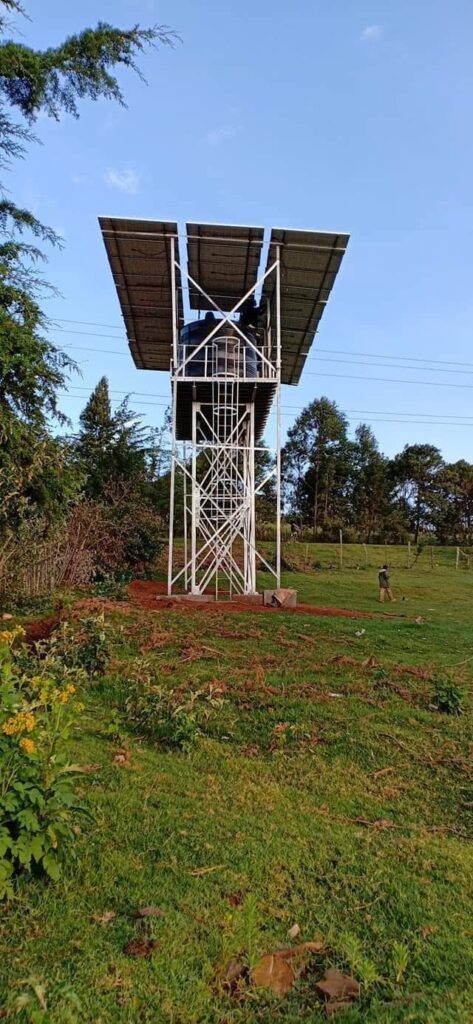
In Kenya’s growing infrastructure and industrial landscape, tower construction plays a vital role in supporting key sectors such as water distribution, telecommunication, energy, and surveillance. Towers are not just tall structures — they are engineering marvels designed to withstand heavy loads, harsh weather, and long-term use while maintaining safety and stability.
From elevated water tank towers in rural counties to communication towers serving urban centers, the demand for durable, cost-effective, and professionally built towers continues to rise.
At the heart of this progress, Geovista Engineering and Consulting Limited stands out as a trusted provider of structural engineering and tower construction services, ensuring every project meets both local and international standards.
The Importance of Tower Construction
Towers serve as vertical solutions to complex engineering challenges. They provide elevation, visibility, and stability for a wide range of applications — enabling gravity-fed water systems, wide telecommunication coverage, and secure mounting for energy or monitoring equipment.
In Kenya, towers are particularly important in:
-
Water Supply Systems: Elevated water towers help create pressure for efficient distribution.
-
Telecommunication Networks: For signal transmission and connectivity.
-
Energy and Lighting: Supporting solar arrays, wind turbines, or floodlights.
-
Security and Surveillance: Providing high vantage points for cameras and monitoring equipment.
Each tower must be designed with precision to handle environmental stresses such as wind, seismic activity, and load variations while ensuring structural safety and reliability.
Types of Towers Used in Kenya
Kenya’s engineering and construction industries utilize different types of towers depending on project requirements and environmental conditions.
1. Lattice Towers
Made of interconnected steel angles or tubes, lattice towers are lightweight, strong, and economical. They are commonly used for telecommunication, broadcasting, and power transmission. Their open-frame design allows them to resist strong winds effectively.
2. Monopole Towers
These are single-shaft towers used in urban areas where space is limited. Monopoles are ideal for smaller loads such as antennas, lights, or small water tanks. They are aesthetically pleasing and easier to install.
3. Guyed Towers
These towers rely on tensioned cables (guy wires) anchored to the ground for stability. They are cost-effective for tall structures but require a large ground area for support cables.
4. Water Tank Towers
Built with galvanized or mild steel, these towers elevate water tanks to provide gravity-fed pressure for distribution. They are widely used in communities, institutions, and industries where a reliable water supply is critical.
Tower Design Considerations
The design process is a critical phase in tower construction. It ensures that the structure meets functional, environmental, and safety requirements. Engineers at Geovista Engineering follow a systematic approach that involves:
1. Load Analysis
Understanding the total weight the tower must support, including equipment, wind loads, seismic forces, and maintenance activities.
2. Material Selection
High-strength, galvanized steel is often preferred due to its durability, corrosion resistance, and cost-effectiveness.
3. Structural Configuration
The geometry of the tower (triangular, square, or circular) is designed based on stability and material efficiency.
4. Foundation Design
A strong and stable foundation is essential. Geotechnical investigations determine the soil’s bearing capacity to design appropriate foundations — from concrete footings to deep piles.
5. Safety and Accessibility
Safety features such as ladders, guard rails, and platforms are integrated to ensure maintenance personnel can access the structure safely.
Durability – Building Towers That Last
Kenya’s environmental diversity — from coastal humidity to arid dust storms — demands towers that can withstand a range of conditions.
To ensure long-term durability, Geovista Engineering employs the following strategies:
-
Use of Galvanized Steel:
Hot-dip galvanization protects the steel from corrosion and rust, extending its lifespan to over 25 years. -
Protective Coatings and Paints:
Towers are treated with weather-resistant coatings that protect against UV radiation, moisture, and oxidation. -
Structural Reinforcement:
Critical joints, bolts, and welds are strengthened to enhance load resistance. -
Periodic Maintenance:
Regular inspections and maintenance prevent structural wear and ensure continued safety and performance.
Durability is not just about materials — it’s about quality design, skilled construction, and preventive maintenance.
Engineering Standards and Compliance
All tower construction projects in Kenya must adhere to strict engineering and safety standards. At Geovista Engineering, we ensure compliance with:
-
Kenya Bureau of Standards (KEBS) for material quality.
-
National Construction Authority (NCA) guidelines for structural safety.
-
Eurocode and British Standards (BS 5950 / BS EN 1993) for design and load calculations.
-
Occupational Safety and Health Standards (OSHA) for safe working conditions.
Compliance ensures not only structural integrity but also regulatory approval, insurance eligibility, and public safety.
Challenges in Tower Construction
Despite the growing demand, tower construction in Kenya faces several challenges:
-
Corrosive Environments: Especially in coastal regions where humidity and salt accelerate rusting.
-
Transport and Erection Difficulties: Remote or rugged terrains can complicate logistics.
-
High Wind and Seismic Activity: Certain regions require specialized anchoring and reinforcement.
-
Unauthorized Modifications: Unplanned additions (like extra antennas) can overload the structure.
Geovista Engineering addresses these challenges through advanced design modeling, field assessments, and adherence to engineering best practices.
Geovista Engineering’s Expertise in Tower Construction
With years of experience in civil and structural engineering, Geovista Engineering and Consulting Limited delivers end-to-end solutions for tower design, fabrication, and installation.
Our tower construction services include:
-
Design and structural analysis using advanced engineering software.
-
Fabrication of galvanized steel components.
-
On-site assembly and erection with safety supervision.
-
Foundation and anchoring works based on soil tests.
-
Maintenance, inspection, and certification services.
We build towers for:
-
Water storage systems
-
Telecommunications and broadcasting
-
Power transmission and lighting
-
Industrial and security applications
Our commitment is to quality, safety, and innovation — ensuring every structure we build stands strong, reliable, and efficient.
The Future of Tower Construction in Kenya
As Kenya continues to invest in infrastructure, energy, and digital connectivity, the demand for towers will only increase. Modern designs will focus on:
-
Smart monitoring systems for real-time structural health tracking.
-
Hybrid designs integrating solar panels or wind turbines for energy generation.
-
Lightweight materials that reduce transport and installation costs.
Sustainability and technology integration will define the next generation of tower construction — and Geovista Engineering is ready to lead this transformation.
Tower construction is more than just erecting steel structures — it’s about engineering reliability, precision, and safety into the backbone of Kenya’s infrastructure.
Whether for water distribution, telecommunications, or renewable energy systems, towers must be designed and built to withstand time, weather, and operational stress.
At Geovista Engineering and Consulting Limited, we combine technical expertise, high-quality materials, and strict compliance with standards to deliver towers that meet the demands of modern Kenya.
When strength meets precision, the result is a structure that stands tall — a symbol of progress, innovation, and sustainable engineering.
