
Every successful construction project begins beneath the surface — literally. Before a single brick is laid, the safety and durability of any structure depend on the strength, stability, and composition of the ground it stands on. This is where geotechnical investigations come into play.
In Kenya and across East Africa, the rapid pace of urbanization and infrastructure development makes it more important than ever to understand subsurface conditions before construction begins. Through advanced geotechnical investigations, engineers like those at Geovista Engineering and Consulting Limited ensure that every building, bridge, and tower rests on a safe, stable, and reliable foundation.
What Are Geotechnical Investigations?
A geotechnical investigation is a scientific study of the soil, rock, and groundwater conditions at a construction site. It involves collecting and analyzing data to determine whether the site is suitable for the proposed structure and to design appropriate foundations.
These investigations are typically conducted by geotechnical engineers using specialized equipment and techniques. The process includes:
-
Site reconnaissance: Assessing the area’s topography, drainage, and geological features.
-
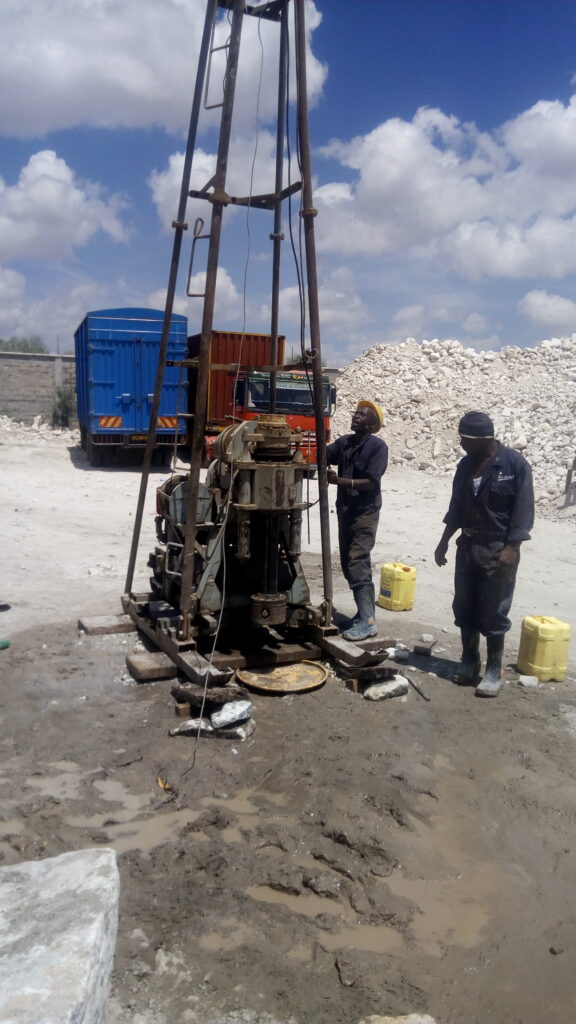
Borehole drilling and sampling: Extracting soil and rock samples from different depths.
-
Laboratory testing: Analyzing samples for strength, composition, and bearing capacity.
-
Data analysis and reporting: Providing design recommendations for foundations and earthworks.
Why Geotechnical Investigations Matter
The ground beneath a structure may appear solid, but conditions can vary greatly from one site to another — or even within the same site. Without proper investigation, builders risk costly design errors, structural failures, or even disasters.
Here are some key reasons geotechnical investigations are essential:
-
Foundation Design Accuracy
The investigation determines the type of foundation needed — shallow, deep, or piled — based on the soil’s bearing capacity and load-bearing characteristics. -
Risk Reduction
It identifies potential hazards such as expansive soils, weak layers, sinkholes, or groundwater issues that could cause instability or settlement over time. -
Cost Efficiency
With accurate data, engineers can avoid overdesigning or underdesigning foundations, optimizing material use and reducing construction costs. -
Regulatory Compliance
In Kenya, local building codes and the National Construction Authority (NCA) require geotechnical assessments for major projects to ensure safety standards are met. -
Long-Term Performance
Proper site evaluation leads to structures that last longer, require less maintenance, and withstand environmental challenges such as erosion and earthquakes.
Stages of a Geotechnical Investigation
A typical geotechnical investigation involves several key stages:
1. Desk Study and Site Reconnaissance
This stage involves reviewing existing geological maps, satellite images, and previous reports about the area. Engineers visit the site to observe drainage patterns, slope conditions, vegetation, and visible soil types.
2. Field Investigation
Here, boreholes are drilled or test pits are excavated to collect soil and rock samples. In some cases, Standard Penetration Tests (SPT) or Cone Penetration Tests (CPT) are performed to assess soil strength and density in situ.
3. Laboratory Testing
Samples are taken to a laboratory where they undergo tests such as:
-
Grain size analysis
-
Atterberg limits (for plasticity and consistency)
-
Moisture content
-
Shear strength and compressibility
-
Permeability and compaction tests
These results reveal the soil’s behavior under load and its ability to support structures.
4. Data Interpretation and Reporting
Engineers analyze the data to develop a geotechnical report, which includes foundation design recommendations, soil profiles, groundwater levels, and potential construction challenges.
Common Geotechnical Challenges in Kenya
Kenya’s diverse geology presents unique challenges for engineers. For example:
-
Black cotton soils (common in parts of Nairobi and Rift Valley) expand when wet and shrink when dry, causing foundation movement.
-
Loose sandy soils along the coast can lead to settlement issues if not compacted properly.
-
Rocky or hilly terrains in Central Kenya require specialized excavation and stabilization techniques.
-
High water tables in some regions can weaken foundations or cause flooding in basements.
Through proper geotechnical assessment, these challenges are identified early, allowing for customized engineering solutions that guarantee safety and stability.
Modern Geotechnical Techniques
Advancements in technology have made geotechnical investigations more accurate and efficient. Modern methods include:
-
Geophysical surveys (such as seismic refraction and electrical resistivity) to map subsurface conditions without extensive drilling.
-
Digital data logging and 3D subsurface modeling for precise visualization.
-
Ground improvement techniques, including grouting, compaction, and soil stabilization, to enhance weak soils.
At Geovista Engineering, these modern tools are integrated into every investigation to ensure clients receive comprehensive, reliable, and data-driven solutions.
The Role of Geovista Engineering in Geotechnical Works
Geovista Engineering and Consulting Limited is a trusted name in geotechnical engineering across Kenya. The company provides a full range of services — from soil testing and site investigations to foundation design and construction supervision.
Their expertise includes:
-
Borehole drilling and soil sampling
-
Laboratory testing and analysis
-
Geophysical and hydrogeological surveys
-
Slope stability and foundation design
-
Construction quality control and reporting
With a multidisciplinary team of experienced geologists, civil engineers, and technicians, Geovista ensures that each project begins on a solid and scientifically verified foundation.
Case Example: Urban Development Projects
In urban centers like Nairobi, Mombasa, and Kisumu, geotechnical works have become a regulatory requirement for high-rise buildings and infrastructure projects. Geovista has participated in several such projects, providing crucial insights that help architects and contractors make informed design choices.
Their field investigations have identified soil weaknesses that could have caused structural damage if left unaddressed — showcasing the vital role of geotechnical assessments in Kenya’s construction boom.
The Future of Geotechnical Engineering in Kenya
As Kenya continues to expand its cities and develop new infrastructure under Vision 2030, the demand for reliable geotechnical services will continue to rise. Emerging technologies such as remote sensing, AI-based soil modeling, and automated testing are expected to make investigations faster and more accurate.
Sustainability will also be a major focus — integrating eco-friendly practices like soil reuse, erosion control, and environmentally conscious construction.
Geotechnical investigations are the invisible backbone of every safe and durable building. They transform guesswork into precision, ensuring that structures are designed to stand the test of time and nature.
In Kenya, where geological conditions can vary dramatically, the expertise of professional firms like Geovista Engineering and Consulting Limited ensures that every project is built on knowledge, science, and safety.
From residential buildings to large infrastructure projects, a strong foundation begins with a proper geotechnical investigation — and that’s where Geovista Engineering excels.
